Full loft survey
A boroscope and thermal imaging inspection of the whole roof space, with moisture readings taken at several points. You get photos of anything we find and an honest recommendation on whether removal is needed.
Every job is quoted as a complete package, so you know what is covered before we start. The list below is what a standard loft removal includes. Extra work, such as replacing large sections of rotten timber or fitting new plasterboard, is priced separately and agreed with you first.
A boroscope and thermal imaging inspection of the whole roof space, with moisture readings taken at several points. You get photos of anything we find and an honest recommendation on whether removal is needed.
Removal of all accessible spray foam from the rafters and felt, using thermal cutting tools, dry ice blasting and an industrial vacuum. Foam is bagged on site and taken away for licensed disposal.
Every rafter is brushed, vacuumed and checked for rot or softening. We treat minor surface mould and flag any structural timber that needs replacing before reinsulation goes ahead.
We clear the eaves and reinstate a 50mm ventilation gap so air can move through the loft again. This is the step that stops condensation returning and satisfies most lender surveys.
A written report with before, during and after photos of every rafter, plus moisture readings. This is the pack you send to your lender, surveyor or buyer's solicitor.
Our removal work is covered by a written workmanship warranty. If moisture readings climb again in the treated area, we come back and investigate at no charge.
Loft spray foam removal in Cheltenham is the controlled extraction of open cell or closed cell spray foam from the underside of a roof, followed by cleaning, drying and reinstatement of the loft space. We cut the foam back in sections, bag it, and vacuum the rafters so no residue is left behind. Because polyurethane foam bonds hard to timber, we use thermal removal tools and a boroscope to check every rafter for trapped moisture before we sign the job off.
Most calls we take come from homeowners who have bought a house with Icynene or Lapolla foam already in the roof, or who are remortgaging and have been told the insulation has to go. Foam sprayed directly onto the felt blocks roof ventilation, and in a wet Gloucestershire winter that means condensation, damp patches and, over a few seasons, timber rot. If you need loft insulation removal near me in Cheltenham Gloucestershire, we survey first and tell you honestly whether the foam can stay or has to come out.
Every loft is different, but the sequence is the same. You get a clear plan, a fixed price and a tidy house at the end of it.
Schedule
Call or book online — a real human picks up and confirms a 2-hour arrival window.
Diagnose
Licensed tech inspects on-site, then walks you through the cause and your options.
Fix
The job is completed to code and done right the first time — no shortcuts, no surprises.
Guarantee
Every job backed by a written workmanship warranty — and we stand behind it.
Dry ice blasting machine
Freezes foam so it releases from timber without abrasive damage. Used on older rafters where sanding would remove the surface of the wood.
Thermal removal tools
Heated cutting blades that slice through dense closed cell foam cleanly, producing less airborne dust than hand tools.
Industrial vacuum and air scrubber
Captures foam particles at the cutting face and filters the air in the loft, keeping dust out of your landing and bedrooms.
Boroscope and moisture meter
Inspects behind foam and checks timber moisture content before, during and after removal so we can prove the loft has dried.
Thermal imaging camera
Finds hidden damp patches and cold spots that a visual inspection would miss, particularly around eaves and chimney breasts.
Scaffolding and respirator
Safe access to eaves and roof edges, plus filtered breathing protection for the team during extraction.
Dry ice blasting
We freeze the foam with dry ice pellets and blast it away from the timber. The foam becomes brittle and lifts cleanly, leaving the rafter surface intact. It is our first choice on older roofs where the timber is soft.
Thermal cutting
Heated blades cut through thick closed cell foam in controlled strips. This keeps the pieces manageable for the vacuum and reduces the amount of dust released into the loft.
Sand blasting for residue
Where foam has soaked into the grain of the timber, controlled sand blasting removes the last of it. We keep the pressure low so the structural strength of the rafter is not affected.
Moisture monitoring
We log moisture readings at several points before and after removal, then re-check after a 24 to 48 hour drying period. The readings go into your report as evidence the loft is dry.
01
What we do: We survey within 48 hours, strip the foam and produce a photo report showing clean, ventilated rafters. The pack goes straight to the buyer's solicitor.
→ The sale proceeds without a price reduction for foam removal, and you have documentation to show any future buyer.
02
What we do: We strip the foam while the property is empty, which is faster and cleaner than working around furniture. We then fit new insulation to a standard your energy assessor will accept.
→ You move into a dry, ventilated loft with insulation that works and no lender questions hanging over the property.
03
What we do: We inspect with a moisture meter and thermal imaging camera to find where the damp is coming from, remove the foam blocking ventilation and treat any affected timber.
→ The ceiling dries out, condensation stops forming and the roof structure is protected from further rot.
04
What we do: We survey multiple lofts in one visit, quote them together and schedule the removals to suit your tenancy gaps.
→ All properties are documented and compliant, and you have one point of contact for future insulation work.
Cheltenham's housing stock splits into two clear groups, and each behaves differently when foam is involved. The Victorian and Edwardian terraces around Tivoli, The Suffolks and Montpellier have breathable roofs with original felt or no felt at all, so foam sprayed onto the rafters traps moisture fast. The 1960s and 1970s estates in Hatherley, Benhall and Warden Hill usually have bitumen felt, which foam bonds to hard and blocks the eaves gap completely. Our wet winters make both worse, because warm moist air from the house condenses on the cold roof deck from October through to March. We plan removals around that, checking moisture readings carefully before we reinsulate. If you need loft insulation removal near me in Cheltenham Gloucestershire, we survey first and tell you whether the foam can stay or has to come out. For a straightforward loft spray foam removal quote Cheltenham homeowners can rely on, call 01242 375143 and we will book a visit.
Tivoli
Victorian villas with original roof timbers and limited loft access. Foam here often bonds straight to the rafters, so dry ice blasting is usually the safest removal method.
Benhall
1960s semis with bitumen felt and shallow roof pitches. Foam blocks the eaves gap quickly, so ventilation reinstatement is a priority on every job.
Pittville
A mix of period properties and newer builds. We often find foam applied over older mineral wool, which means two layers to strip and dispose of.
Charlton Kings
Larger detached homes with bigger roof areas. These jobs take longer to strip but are easier to access, so we can usually complete them in two to three days.
Bishops Cleeve
Modern estates where foam was installed by previous owners. Closed cell foam is common here and needs thermal cutting rather than hand tools.
Wet Gloucestershire winters with high indoor humidity
Warm moist air rises into the loft and condenses on a foam-sealed roof deck. This is the main driver of damp and rot in Cheltenham lofts, and it is why ventilation gaps matter so much.
Older breathable roofs in period properties
Victorian and Edwardian roofs were designed to let moisture escape through the fabric. Foam blocks that path entirely, so removal and ventilation reinstatement are essential rather than optional.
Bitumen felt on 1960s and 1970s estates
Foam bonds hard to bitumen felt and often tears it during removal. We plan for felt repair or replacement on these properties and price it into the quote.
Shallow roof pitches limiting loft access
Some Cheltenham lofts have very little headroom, which rules out standard equipment. We use compact extraction tools and smaller air scrubbers to work in tight spaces.
Foam in a loft causes a predictable set of problems, and most of them get worse rather than better. Here are the ones we see most often across Cheltenham and Gloucestershire.
Problem
Your sale or remortgage stalls, and buyers pull out once their surveyor flags it. The longer it sits, the more the value is questioned.
Our Fix
We strip the foam, document the condition of every rafter and provide a report showing the roof is ventilated again. Most lenders accept our pack, and we can usually attend within 48 hours if you are on a deadline.
Problem
Damp patches spread across the roof deck, insulation loses its performance and mould starts to appear on timbers and stored items.
Our Fix
Foam sprayed across the felt blocks the ventilation path. We remove it, clear the eaves and reinstate a 50mm gap so moist air can escape. We take moisture meter readings before and after to prove the loft has dried out.
Problem
Soft timber weakens the roof structure, and by the time a stain appears on the ceiling the damage is often several years old.
Our Fix
Our survey uses a boroscope and thermal imaging camera to find damp timber before we start. We cut the foam away, treat affected sections and replace battens where the wood has gone soft, then let the timbers dry naturally.
Problem
Gaps open up, insulation performance drops and the loose foam can block vents or drop onto stored belongings.
Our Fix
We assess whether the foam can be repaired or has to come out. Where it is failing, we remove it completely, clean the rafters and fit new insulation boards or mineral wool so the loft performs as it should.
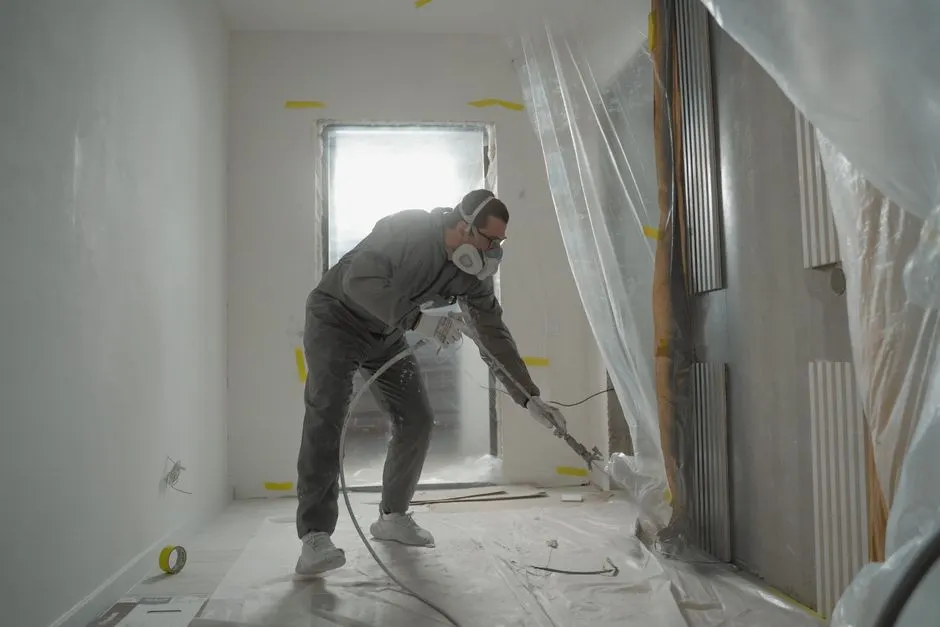
Spray foam in a loft is not always a disaster, but when it blocks ventilation or fails a lender's survey it has to come out. Here is what changes once it is gone.
Mortgage and lender approval
Most high street lenders will not lend against a roof with spray foam bonded to the felt. We remove the foam, photograph every rafter, and hand you a report your surveyor can sign off. That paperwork is usually the difference between a stalled sale and a completion date.
Ventilation restored
Foam sprayed across the roof pitch seals the gap between tiles and felt, so warm moist air from the house has nowhere to go. Once we strip it back, air moves through the loft again and condensation stops forming on the underside of the roof. We check airflow with a moisture meter before and after.
Timber protected from rot
Trapped moisture rots rafters from the inside, and by the time you see a stain on the ceiling the damage is often years old. Removing the foam lets the timbers dry out at their natural rate. We treat any affected sections and replace battens where the wood has gone soft.
Insulation that actually works
Once the old foam is out, we can fit insulation boards or mineral wool correctly, leaving a clear ventilation gap at the eaves. That gives you a warmer loft, lower heating bills and a U-value your energy assessor will accept, without the risk that comes with foam.
Google ★★★★★4.9
Surveyed on Tuesday, stripped the foam by Thursday and had the report to our lender the same week. The sale went through without a hitch. The team were tidy and explained every step.
Google ★★★★★4.8
I had three rental properties with foam in the lofts. They surveyed all three in one visit and quoted them together, which saved me money. Two only needed partial removal and they told me so.
Checkatrade ★★★★★4.9
Closed cell foam right down to the felt and damp timbers. They cut it out over two days, replaced four battens and left moisture readings for us to check. Six months on, the loft is dry.
Google ★★★★★5.0
Honest advice from the first phone call. They told me my foam was sound and did not need removing, which saved me thousands. I have already recommended them to two neighbours.
Real answers to the questions we hear most often from local homeowners and property managers.
If you are searching for spray foam removal near me in Cheltenham, we cover every postcode in the town and the surrounding villages. The same team that handles loft spray foam removal can survey, quote and strip foam from lofts, roofs and cavity walls.
View Spray Foam Removal near meWhen a sale is hanging on a surveyor's report, a same day spray foam removal visit can keep things moving. We can often attend within 48 hours for urgent Cheltenham jobs, survey the loft and give you a written price the same afternoon.
View same day Spray Foam RemovalWater coming through a foam-blocked roof does not wait for office hours. Our 24/7 spray foam removal line is there for emergency call-outs across Cheltenham, so you can get advice on making the roof safe before a full removal is booked in.
View 24/7 Spray Foam RemovalMost of our work is residential spray foam removal in Cheltenham homes, from Victorian terraces in Tivoli to 1970s semis in Hatherley. We work around family routines, keep dust contained and leave the loft clean enough to use for storage again.
View Residential Spray Foam RemovalWe also handle commercial spray foam removal for Cheltenham landlords, estate agents and property managers. If you have a portfolio with foam-insulated lofts, we can survey several properties in one visit and quote them together to keep costs down.
View Commercial Spray Foam RemovalFoam sprayed directly onto the roof felt is the hardest to remove and the most likely to cause rot. Our roof spray foam removal service uses dry ice blasting and thermal tools to release the foam without tearing the felt underneath.
View roof spray foam removalCall us on 01242375143 or email [email protected] and we will arrange a free survey at your Cheltenham property. Our phone line is answered 24/7, and we aim to book surveys within 48 hours across Gloucestershire. If you have photos of the foam, send them over and we can often give you an initial view before we visit.
Phone
01242375143Address
15-21 Clarence Street, Cheltenham, GL50 3JL, UK, Cheltenham, Gloucestershire
Hours
Mon–Fri: 7AM – 7PM
Sat: 8AM – 4PM
Sun: Emergency Only
24/7 Emergency Available